

The history of the SL* lamp (1980 – ~2001)
In the midst of the 1970s energy crisis, the world sought an energy-efficient alternative to the traditional incandescent bulb, which consumed vast amounts of electricity and had a short lifespan. In 1980, Philips revolutionized the lighting industry with the groundbreaking SL*. Discover the fascinating timeline here: its introduction, the four generations, the many variations, and ultimately, the end of an era.
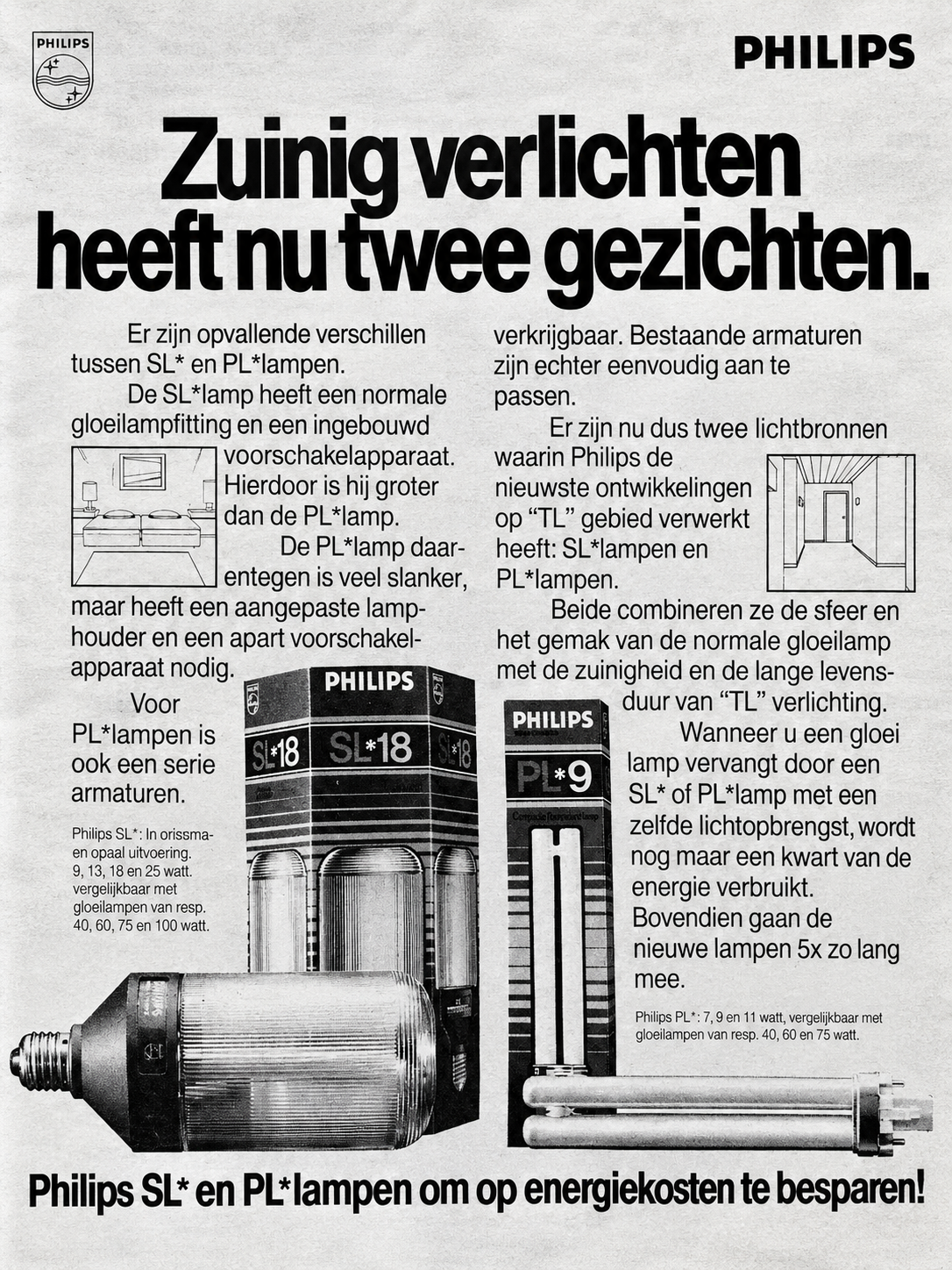
1980: The revolutionary introduction of Generation 0
In 1980, Philips introduced the very first SL* lamp to the general public. While standard incandescent bulbs wasted a great deal of energy and burned out quickly, the SL* featured an integrated ballast within a compact housing and a standard base. Offering energy savings of up to 75% and a lifespan of thousands of operating hours, this pioneering design permanently changed how households and businesses used artificial lighting.
We consider the SL model released at that time to be "Generation 1." Work was already underway on an opal version, which initially featured a smooth glass finish, but this was quickly changed to a prismatic finish before the lamps became available to the public. In reality, this is "Generation 0", as there are structural differences between these initial SL lamps and the Generation 1 models produced between 1981 and 1986. The most significant difference is the starter, which is located between the electrodes rather than at the bottom of the housing; additionally, the tubes are thinner and positioned closer together. These features were modified the following year. Consequently, this version is relatively rare; unfortunately, I have not yet managed to acquire one.
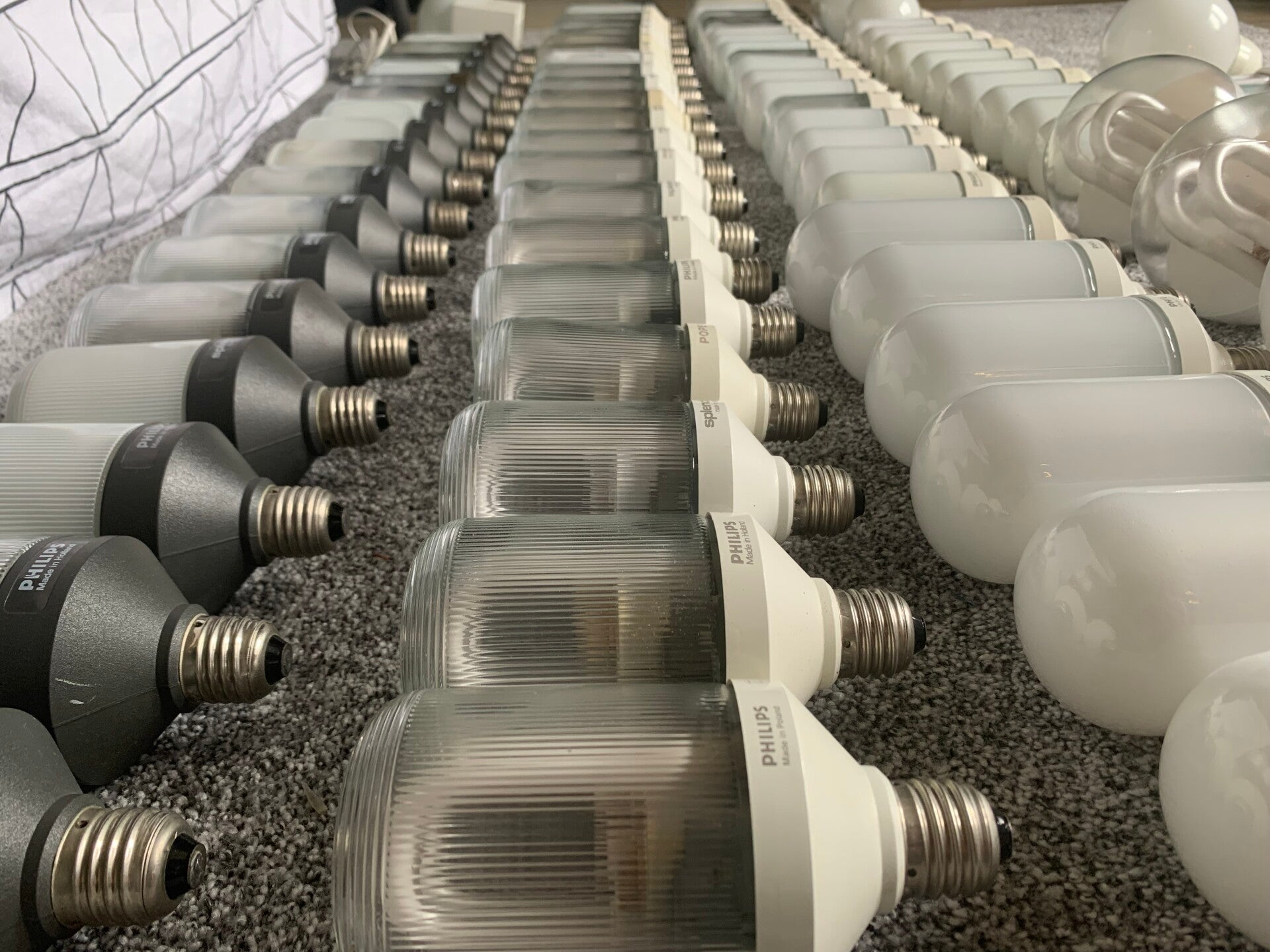
Generation 2, many variations (1986-1993)
After a few years, it was time for a redesign. This was the second generation, easily recognized by its white base, though it retained the characteristic shape of the first generation. The base was made sturdier and as a single, solid unit. However, nothing drastic changed regarding the core technology. The only truly noticeable difference was the addition of small clips near the tube electrodes. Wattage and lumen output remained unchanged. It was also during this period that the 'energy-saving lamp' became significantly more popular.
In the mid-1980s, Philips began introducing various versions. Alongside the standard second-generation models, the Prismatic and the Opal, the fantastic 'Decor' series was launched. Gone was the 'jam jar' glass; in its place was a beautiful white globe. Aesthetically, it was a great choice for fixtures like a pendant light over the dining table.
What many consider perhaps the most unique version also appeared during this era: the 'Reflector,' also known as the SL*R. It was specially designed for use in greenhouses. The principle was the same as the Decor model, except that the coating covered only the bottom half. This focused the light beautifully downwards while allowing you to see inside the bulb ;). A minor change occurred as the 1990s approached: the logo was inverted. Since SL*R lamps were almost always installed pointing downwards, the original logo orientation would have appeared upside down, something Philips deemed silly. Hence the change.
People often wanted cozy, comfortable lighting for their living rooms, a need the Opal model met well. However, in the early 1980s, the formula changed with the introduction of the 'SL*Comfort.' The ribbed opal glass was abandoned in favor of a smooth, finished opal glass with a rounded top. The 'jam jar' texture was a thing of the past. Internally, it remains exactly the same as other second-generation models. We do not abbreviate "Comfort" to "C," so "SL*C" was not used as a designation, we will return to this on the Prints & Logo's page. This was, in fact, the last SL that still bore a resemblance to the first generation in terms of its basic structure. That changed significantly in 1993.
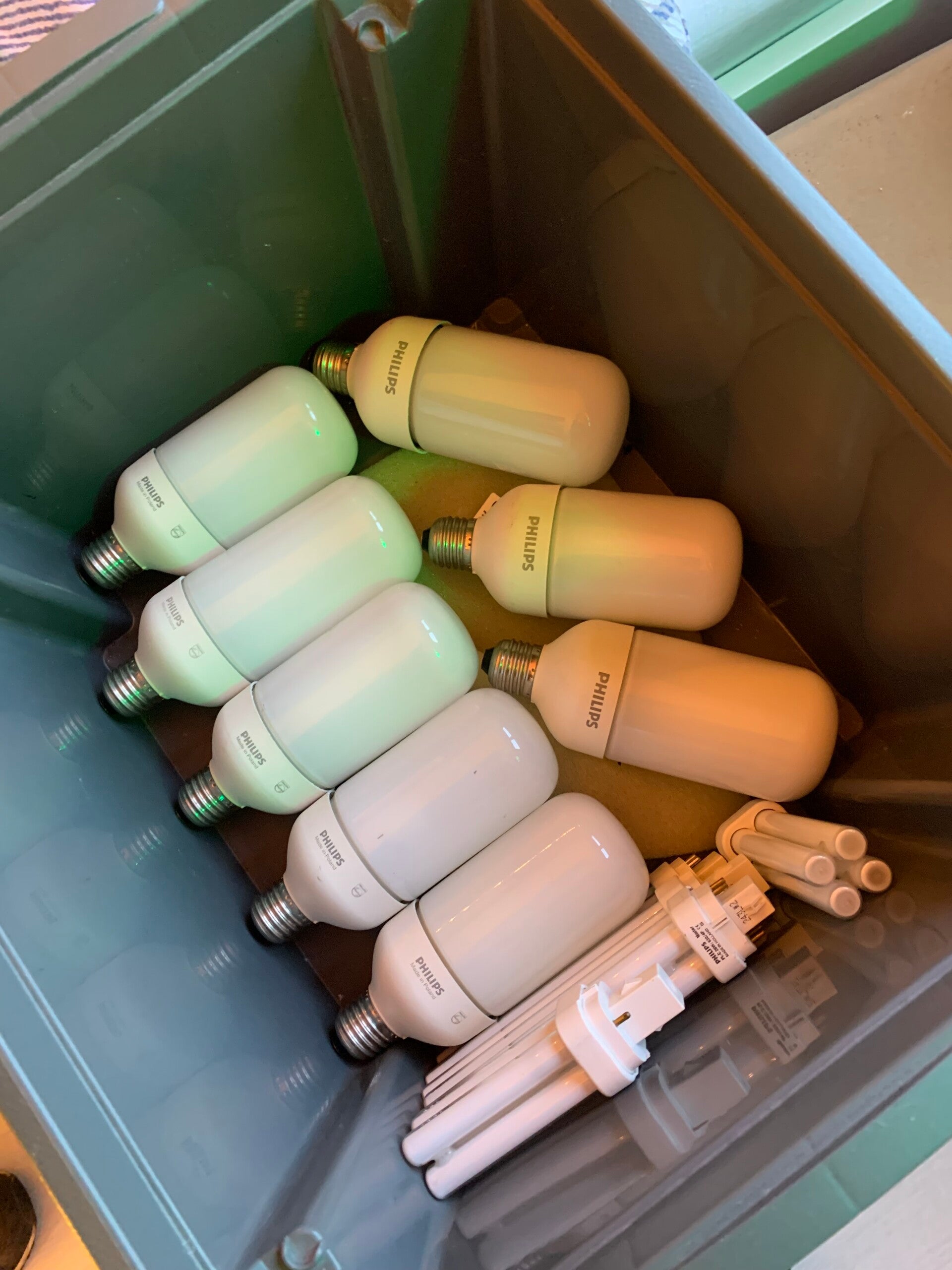
Generation 3, a big change (1993-1998)
Of course, not everyone was a huge fan of the SL*. People disliked the fact that it took a while to reach full brightness, but they were particularly put off by its bulkiness; SL lamps are quite large and heavy compared to a simple incandescent bulb. Around this time, compact fluorescent lamps, such as the Philips PL-Electronic, were already appearing; these were much slimmer and lighter, though quite expensive (as were SL lamps). Generation 3 was intended to address this. It featured a new, slimmer design and a smaller ballast, although the wattages remained the same. Both Prismatic and Comfort versions were released.
Around 1995, the 'Flame' variant was also released in the Netherlands. It had the same construction as the Comfort model but featured a color temperature of 2300K instead of the 2700K found on all 'standard' SL lamps. In other regions, such as the Mediterranean and Asia, there was a greater preference for 'Daylight' versions. While not highlighted in Philips catalogs, they certainly existed across the 2nd, 3rd, and 4th generations of SL lamps (there is even one known example from Gen 1, though it is extremely rare). For instance, Daylight and Cool Daylight versions were available in the 3rd and 4th generations. Unfortunately, finding these lamps in my region requires considerable effort, as they were never sold here. The Daylight versions were only available in the Prismatic style.
The 'Decor' model was also given a makeover. The base of the standard Gen 3 lamps was used in conjunction with a glass globe; the same applied to the SL*R, although its logo was inverted again.
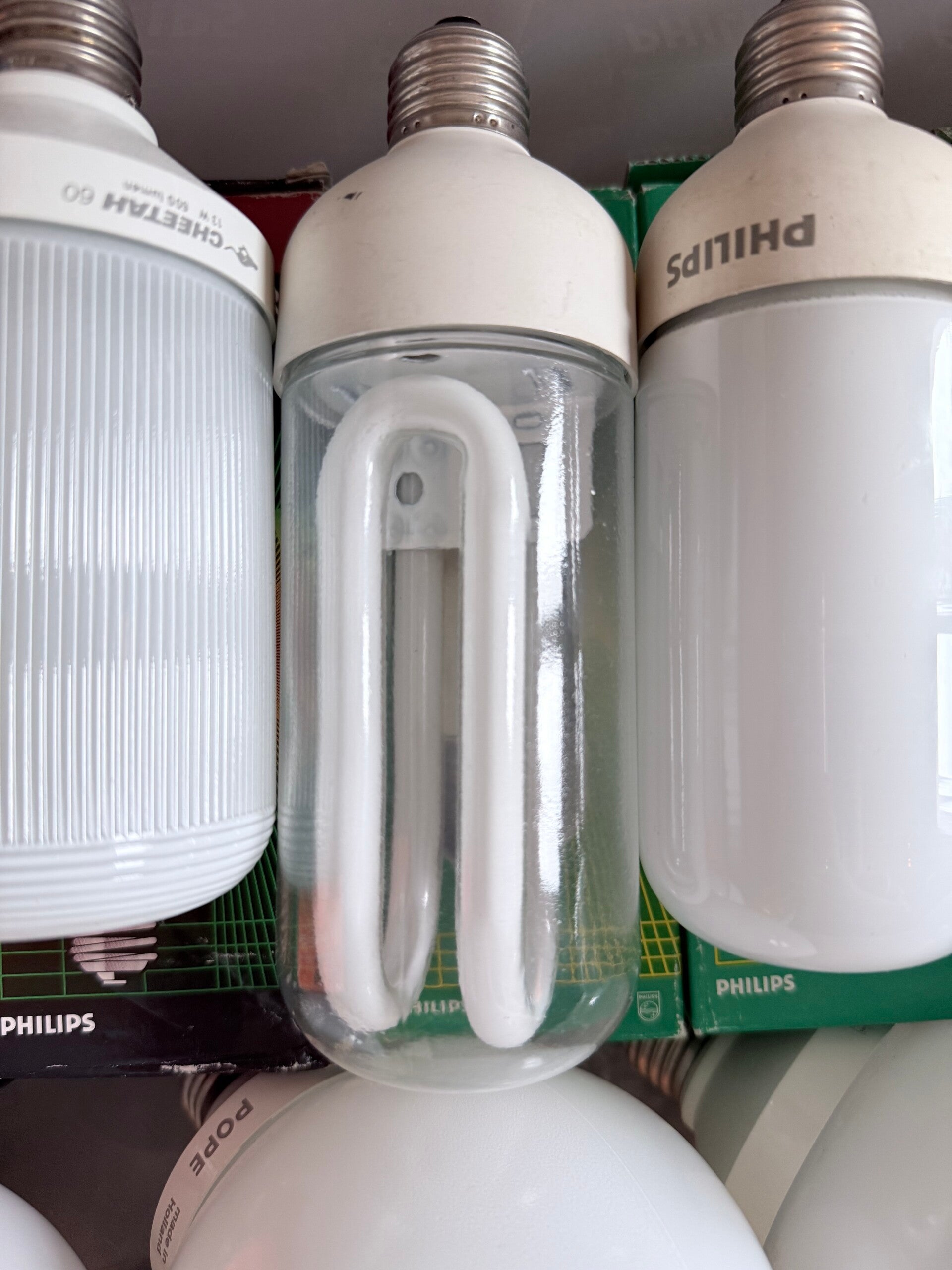
1 last time, generation 4 (1998-2001)
The finish line is in sight. CFLs are becoming increasingly affordable and more compact, whereas the SL is still hampered by its bulk. Generation 4 introduced a major change: the ballast was integrated into the base, meaning it was no longer visible through the glass. It had been made compact enough to house the ballast and starter internally. As these were its final years, the range was limited to Prismatic, Comfort, and Decor versions. The SL* has had its day. Companies are experimenting with LED, and standard compact fluorescent lamps are available in all shapes and sizes; the 'clunky' SL* simply cannot compete with that anymore. Philips stopped the production.
Create Your Own Website With JouwWeb